
Pull a key from your pocket and press the unlock button right on its head. That's one of the remote head keys at work: a metal blade and a remote control built into a single piece, with no separate fob dangling from the ring. They've been fitted to loads of cars since the 2000s, which is exactly why mix-ups are so common when one needs replacing. Here's how to tell what you're holding and what will actually work with it.
What Is a Remote Head Key?
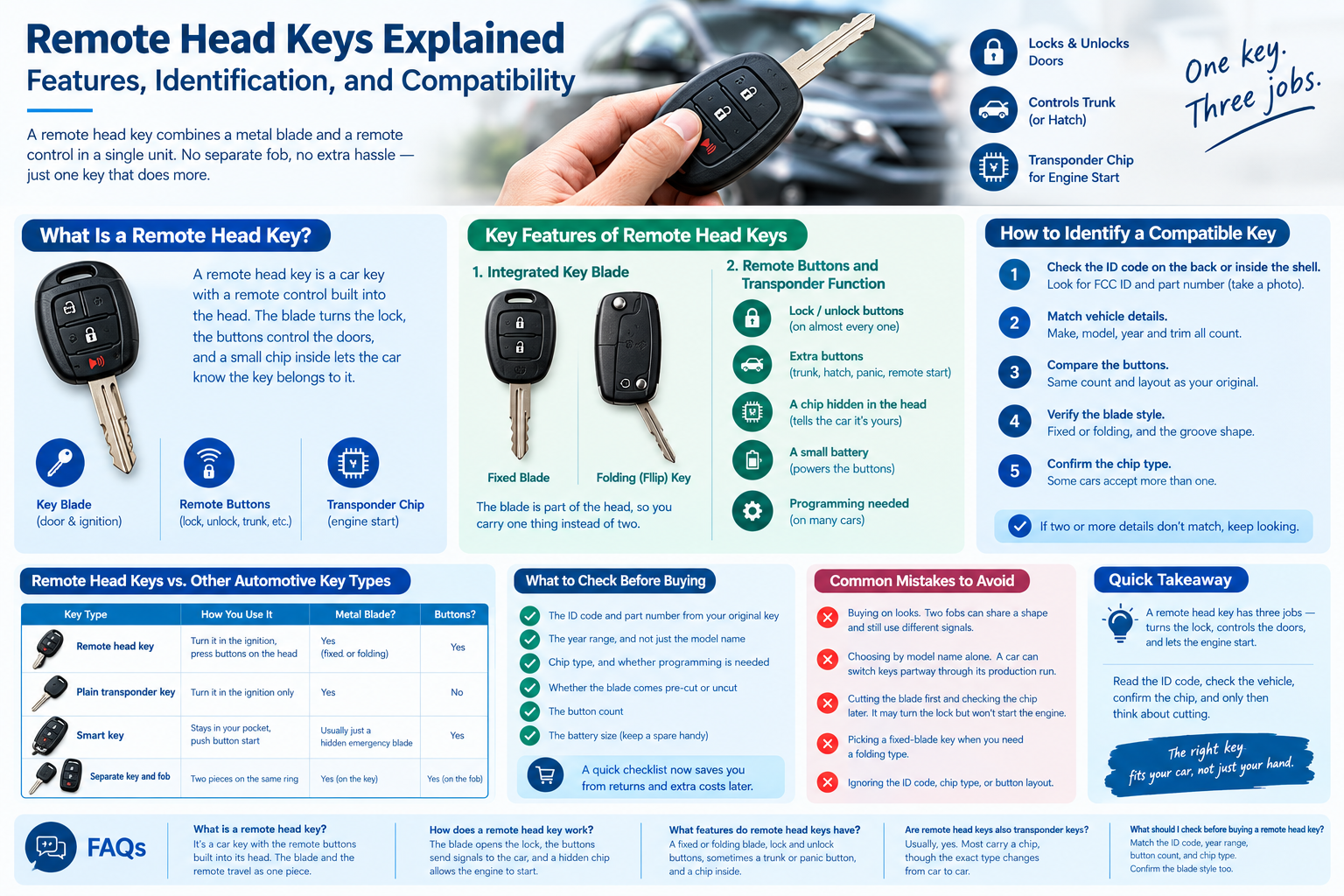
A remote head key is an ordinary-looking car key with a remote control tucked into its plastic head. The blade turns the lock, the buttons control the doors, and a small chip inside lets the car know the key belongs to it. Three jobs, one handle.
How Do Remote Head Keys Work?
Turn it in the door, and it behaves like any old key. Press a button and it sends a short signal that locks, unlocks, or pops the trunk. Slide it into the ignition, and the little chip has a quiet word with the car. If the chip's answer isn't right, the engine stays silent, no matter how neatly the blade was cut. That's why remote head car keys need more than a quick trip to the key cutter.
Key Features of Remote Head Keys
Think of it as a key, a remote, and a chip sharing one handle. Two details tell most of the story.
Integrated Key Blade
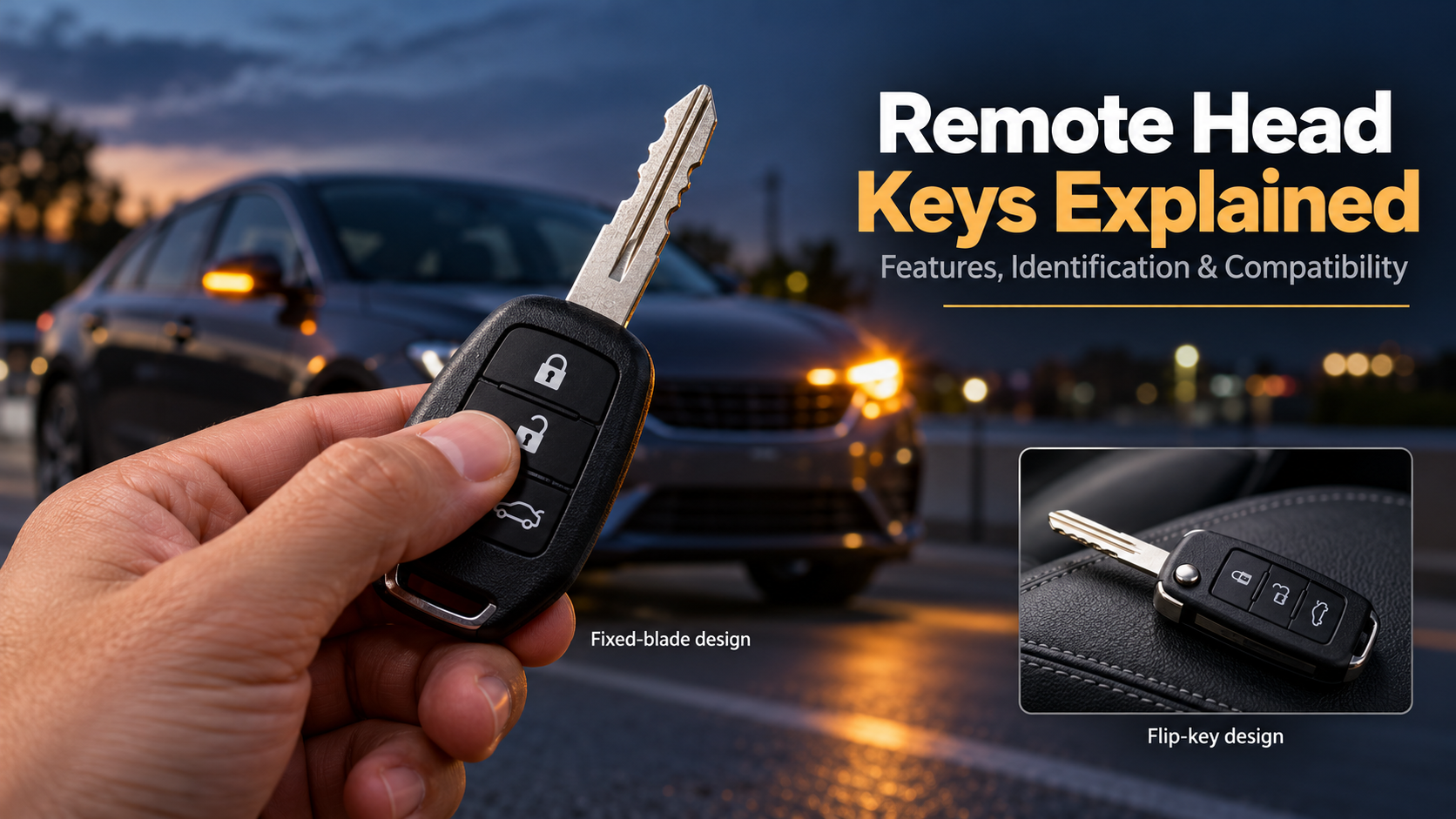
The blade is part of the head, so you carry one thing instead of two. On some models it stays fixed in place. On others it folds into the head like a pocket knife and springs out at the press of a button. Those are the flip keys, and people like them because nothing pokes through a pocket. Fixed or folding, the blade still has to match the lock's cut.
Remote Buttons and Transponder Function
- Lock and unlock buttons on nearly every one
- Extra buttons on some, for the trunk, hatch, panic alarm, or remote start
- A chip hidden in the head that tells the car it's allowed to start
- A small battery that powers the buttons, while the chip usually works without it
- A programming step on many cars before the buttons and the chip are accepted
How to Identify a Compatible Remote Head Key
Matching by looks alone rarely works. Two keys can look like twins and still behave differently. Check these clues in order:
- The code on the back or inside the shell. Many fobs carry a short ID code, often labeled FCC ID, along with a part number. It's the strongest clue for key fob identification, so photograph it before you start shopping.
- Vehicle details. Make, model, year, and trim all count.
- Buttons. Same count and same layout as your original.
- Blade style. Fixed or folding, plus the shape of the grooves.
- Chip type. Some cars accept more than one, so check the listing or ask.
If two of these don't line up, keep looking.
Remote Head Keys vs. Other Automotive Key Types
Sellers use plenty of names for keys, so it helps to see where this one sits among automotive remote keys.
Key type | How you use it | Metal blade? | Buttons? |
Remote head key | Turn it in the ignition, press buttons on the head | Yes, fixed or folding | Yes |
Plain transponder key | Turn it in the ignition only | Yes | No |
Smart key | Stays in your pocket, push button start | Usually just a hidden emergency blade | Yes |
Separate key and fob | Two pieces on the same ring | Yes, on the key | Yes, on the fob |
What to Check Before Buying a Remote Head Key
Any good remote head key guide ends up at the same short checklist:
- The ID code and part number from your original key
- The year range, and not just the model name
- Chip type, and whether programming is needed
- Whether the blade comes pre-cut or uncut
- The button count
- The battery size, so you can keep a spare handy
Common Remote Head Key Identification Mistakes
The most frequent slip is buying on looks. Two fobs can share a shape and still use different signals, and the car will simply ignore the wrong one. Close behind is choosing by model name alone, forgetting that a car can switch keys partway through its production run. Some people cut the blade first and check the chip afterward, only to find the key turns the lock but won't start the engine. And plenty grab a fixed-blade key when theirs was a folding type, then wonder why the replacement feels wrong in the hand from day one.
Pick the Right Key the First Time
Once you know a remote head key has three jobs, choosing a replacement gets a lot simpler. Read the ID code, check the vehicle, confirm the chip, and only then think about cutting. Transponder Island sorts keys by make and by maker, so narrowing down the right one takes fewer guesses.
FAQs
What is a remote head key?
It's a car key with the remote buttons built into its head. The blade and the remote travel as one piece.
How does a remote head key work?
The blade opens the lock, the buttons send signals to the car, and a hidden chip allows the engine to start.
What features do remote head keys have?
A fixed or folding blade, lock and unlock buttons, sometimes a trunk or panic button, and a chip inside.
Are remote head keys also transponder keys?
Usually, yes. Most carry a chip, though the exact type changes from car to car.
What should I check before buying a remote head key?
Match the ID code, year range, button count, and chip type. Confirm the blade style too.