
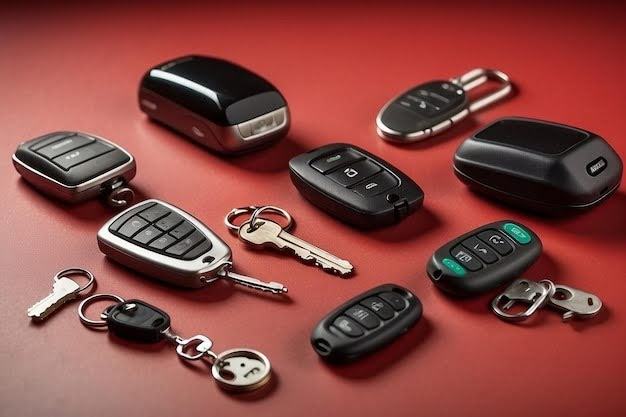
Two owners drive the same model of car. One walks into a shop and leaves with the right key in five minutes. The other makes three trips and still ends up with a key that won't start the engine. The difference isn't luck. It's knowing which few details decide the match. What follows is a clear path through those details for automotive car keys across different vehicle models, with a deeper guide linked wherever a topic needs more room.
Understanding Automotive Key Types and Compatibility
Every match starts with the key type. A key only works in a vehicle built to accept its style, and that's the heart of automotive key compatibility. Simple keys travel across more models. Feature-heavy ones get picky. If you know which type you hold, you've already ruled out half the shelf.
- Chip-and-blade: A plain key with a chip hidden in the head and no buttons.
- Blade plus buttons: Lock and unlock built into the same piece.
- Folding fob: The blade tucks into the body like a pocket knife.
- Push-button fob: Stays in your pocket while the engine starts.
For a closer look at how far each type fits from one model to the next, read our guide on [automotive key compatibility across vehicle models].
How Vehicle Information Affects Key Selection
Your vehicle narrows the field faster than anything else. Make, model and year start the job, and trim finishes it. Carmakers often change key styles partway through a model run, so a year on its own can mislead. A push-button start almost always points toward smart keys, while a turn-key ignition points to a different family altogether.
When the key itself is missing, the VIN fills the gap, and the build date on the driver's door label helps settle year questions. Everything worth gathering is listed in [what information is needed to identify the correct automotive key]. If the key is already gone, [lost key solutions and automotive key options] walks through the route from VIN to replacement.
Understanding FCC ID, OE Numbers, and Part Numbers
Looks tell you very little. Codes tell you the truth. Three of them do most of the identifying, and they work like the key's ID card. On most car key fobs, they sit on the back or under the battery cover.
- FCC ID: Names the radio part inside the fob.
- OE number: The number the vehicle maker gave your original key.
- Key part number: Ties a replacement back to that original.
- Two out of three: If two of them agree, you can be fairly confident about the match.
Key Frequency and Transponder Information
A key does two quiet jobs. The buttons talk to the vehicle by radio, and the chip inside answers a quiet question from the ignition. Both have to match. A key with the right chip but the wrong radio signal starts the engine while the buttons stay dead. A key with the right signal but the wrong chip opens the doors and refuses to start.
That's why transponder keys need a check on both counts, and why programming can pair a key but can't change the signal a fob sends. The full story on radio signals is in [why automotive key frequency matters for vehicle compatibility].
Product Specifications and Selection Guidelines
Selection works best as a short path: confirm the type, lock in the vehicle, read the codes, check the extras, confirm pairing, and look at price last. Count the buttons early. Layout matters most on remote head keys, where a different pad can mean a different key.
Here is a quick map of what to check and where to go deeper:
Question | What to Check | Go Deeper |
Which key do I pick? | Type, vehicle, codes, extras, pairing, then price | [How to choose the correct automotive key for your vehicle] |
Is buying online safe? | Photos, codes, chip, return terms and the seller | [What to check before buying an automotive key online] |
Does the case match? | Outline, buttons, blade and battery | [Understanding automotive key shells and their compatibility] |
Should I own a backup? | Matching codes, an early test and safe storage | [Why spare automotive keys are important] |
Common Mistakes to Avoid
Most wrong orders share one story. The key looked right, the price looked fair, and the order went through before anyone checked a single code. Then the fob arrived and did nothing.
- Trusting looks: Same shell and logo don't mean same key.
- Stopping at the year: Trim and build date often hold the real difference.
- Ignoring the radio signal: Buttons need the right frequency, whatever the chip says.
- Mixing up blanks and finished keys: Automotive key blanks usually need cutting and, for chip keys, pairing before they work.
- Waiting for the last key to go: A matching spare is far cheaper and calmer than a rescue.
Conclusion
Vehicle key identification comes down to a few facts and one habit. Know your key type, your vehicle details and the codes on your key, then check the chip and signal before you order. Do that every time, and the right key is rarely a surprise.
Transponder Island lists FCC IDs, OE part numbers, and chip details alongside its keys, and lets you narrow results by make, model, and year, so the details you collected match what's on the shelf.
FAQs
How do I identify the correct automotive key for my vehicle?
Start with make, model, year and trim, then match the codes on your current key.
What information is needed to check automotive key compatibility?
Vehicle details, FCC ID, part number, chip type, frequency and button count.
How do vehicle make, model, and year affect key selection?
They set the key family. Mid-run changes mean the year alone isn't enough, so add trim.
What are FCC ID and part numbers used for?
They confirm a key is the one your vehicle expects, not just one that looks like it.
How do I verify automotive key specifications before purchase?
Compare codes, chip, frequency and buttons with your original. Ask the seller if one is missing.