
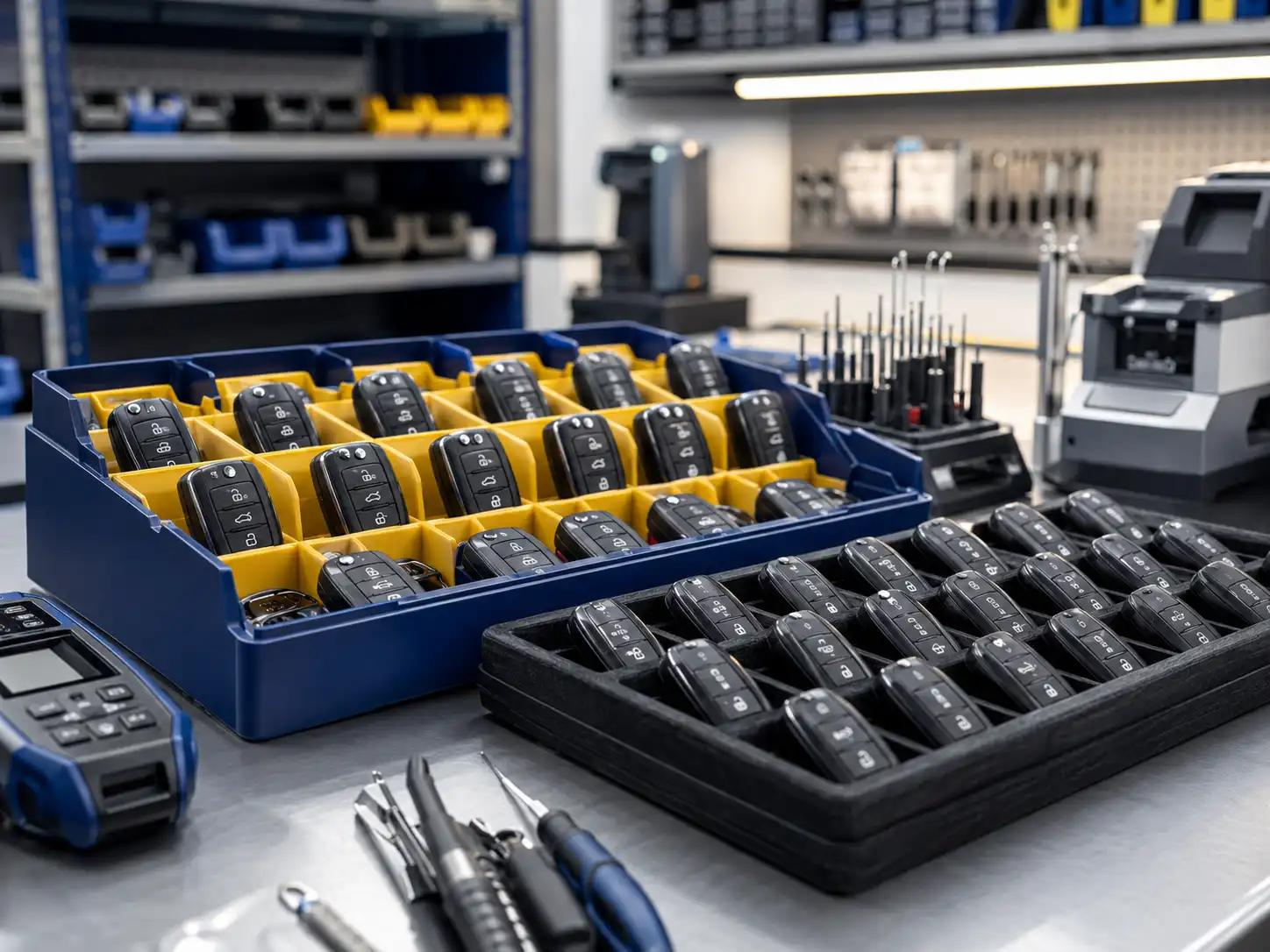
Picture a new mobile locksmith with a van, a modest budget, and three calls in one morning for three different makes. There is only so much room on the shelf, and every extra box ties up money that tools and fuel also need. Building a car key inventory is less about owning every key and more about holding the ones you are likely to use, for the vehicles you can actually work on. Here is how to decide what to stock, where to put it, which vehicles earn more space, and when to reorder.
Why a Well-Planned Car Key Inventory Matters
Too little stock costs you jobs in plain view. A customer waits while you place a rush order, an appointment slides to next week, or you turn down a request because the key is not on hand.
Too much stock hides its cost. Cash sits in boxes that move slowly, and a few expensive keys can swallow a budget that would have covered a dozen everyday items. A sound locksmith key inventory balances those two risks.
Your setup shifts the balance. A mobile operator works within the limits of a van or a case, so every slot has to earn its place. A shop has more room, but shelves fill fast when nobody questions what goes on them. Either way, the first real decision is which product categories belong at all.
What Should Be Included in Your Key Inventory?
The right mix depends on the vehicles you serve, the equipment you own, and the jobs you accept. A new locksmith with one cutting machine and one programmer needs a very different shelf from a shop with a full bench. Start with the car key supplies your tools can handle, then widen the range as demand shows up.
Key Blanks and Transponder Keys
- Mechanical key blanks for the vehicle applications you expect to see.
- Transponder keys for immobilizer systems your programmer supports.
- High-security blanks, if your cutting machine can cut them.
- Replacement transponder chips for supported repair or cloning jobs.
Check that your cutter or programming tool supports a key type before buying more than a unit or two. Starting small with your key blanks inventory costs little, and you will quickly see whichblank keys actually leave the shelf.
Remotes, Smart Keys, and Key Shells
- Remote head keys and replacement transmitters.
- Smart and proximity keys for vehicles you can serve.
- Replacement shells and compatible blades.
- Emergency keys, remote batteries, and other small parts.
Treat shells, remotes, and complete electronic keys as separate stock items. A shell is only the housing, so it does not arrive with working electronics. Your automotive remote inventory is also where money disappears fastest, since smart and proximity keys tend to cost more per unit than blanks.
How to Organize Automotive Key Inventory
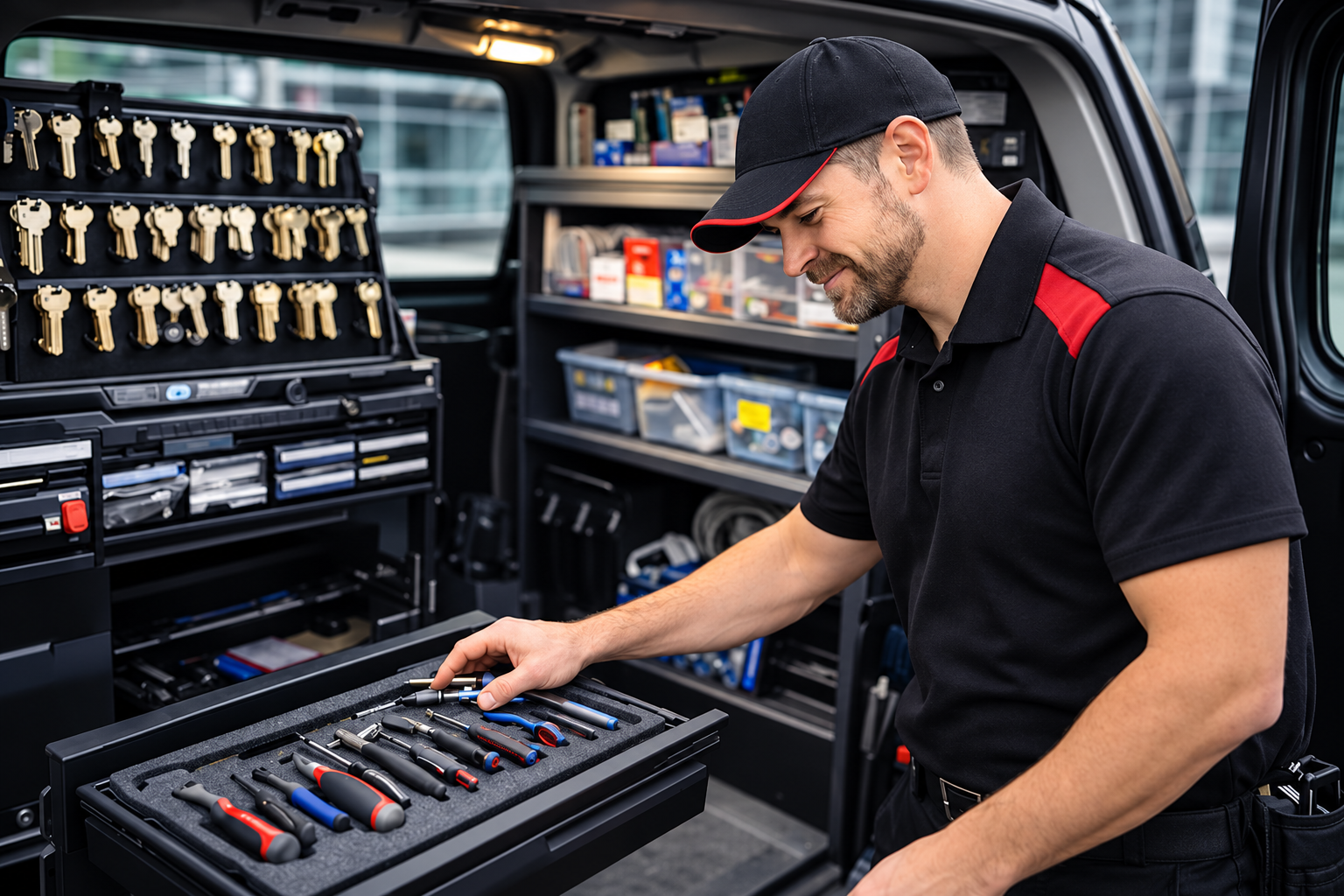
A shelf you cannot read slows down every job. Set up your automotive key stock like this:
- Separate blanks, transponder keys, remotes, smart keys, and small parts.
- Group items by vehicle make or by one consistent catalog reference.
- Label every compartment with the product identifier.
- Keep look-alike but incompatible versions in separate bins.
- Note each storage location in a simple spreadsheet.
- Store fragile electronics in protective packaging.
Here is why labels matter. Take two remotes that look identical but carry different part numbers. Toss them into one bin and you could cut, program, and hand over the wrong one before anyone notices. A label costs pennies compared with a return trip.
Once every item has a home, you can see what fills your shelves and which products deserve less space.
How to Prioritize Products Based on Vehicle Coverage
Stocking the widest range of keys is not the goal. Good locksmith inventory planning matches products to likely demand and to the tools you own. A popular car you cannot program is still a poor purchase.
- Look at the makes and model years that dominate your service area.
- List which key applications your cutter and programmer support.
- Spot vehicles that share compatible replacement products.
- Give more room to items customers ask for again and again.
- Keep small quantities of expensive or uncertain-demand smart keys.
- Log unusual requests before you commit money to them.
Say Ford and Toyota requests keep coming in and your equipment supports both. Compatible products for those applications can claim more shelf space than a model you have seen once. Also remember that variety and quantity are different things. Ten units of one popular key makes a different shelf from ten different keys with one unit each.
Customer demand | Equipment support | Stocking approach |
High | Yes | Hold a few units and reorder often |
High | No | Wait until the tools are in place |
Low | Yes | Keep one unit, or order on request |
Low | No | Skip it |
How to Track Key Stock and Reorder Levels
You do not need expensive software for this. A spreadsheet works for a new car key inventory as long as each row captures the right details:
- SKU, product name, or part number.
- Compatible vehicle applications.
- Quantity on hand.
- Quantity reserved for scheduled jobs.
- Supplier and unit cost.
- Storage location.
- Last usage date and reorder threshold.
Available quantity is the number that counts, so subtract units reserved for booked jobs and remove anything returned or defective.
Set each reorder point from real usage and supplier lead time. Say you use 4 units of one key per week and replenishment takes 2 weeks: 4 units × 2 weeks = 8 units. That covers expected demand while you wait, and a small buffer can absorb a busy week. Treat it as an example, not a quantity to copy for every product.
Then review the sheet on a regular schedule. Note the fast movers, the slow movers, and the items customers asked for that you did not have.
Common Automotive Key Inventory Mistakes
Each of these has a price, either in cash or in a delayed job:
- Buying big before you know demand. Money sits in boxes while the items you actually need run out.
- Ordering by appearance. A wrong part number means a return and a customer left waiting.
- Overstocking smart keys. A few unused units can tie up cash for months.
- Mixing similar products in one bin. The wrong key gets cut or programmed.
- Skipping records for defective, returned, or used stock. Your sheet says you own a key that you do not.
- Ignoring lead times. A fast-moving key runs out before the next shipment lands.
- Buying keys your equipment cannot cut or program. They sit idle until you add the right tools.
None of this has to be permanent. Review your numbers as real demand shows up, and adjust.
Build Stock Around Real Customer Demand
Start with the keys and remotes that match the vehicles you regularly handle, label everything, and let your records show where to expand. A tidy car key inventory grows from actual requests, not guesses, and it never calls for buying everything at once. Compare product applications carefully before each order. When you are ready to plan your next purchase, explore automotive key blanks, transponder keys, remotes, and related locksmith supplies at Transponder Island.
FAQs
What should a new locksmith include in a car key inventory?
Start small with blanks, transponder keys, and a few remotes for the vehicles you serve most. Add smart keys and shells once demand and your equipment justify them.
How should automotive keys be organized?
Sort by product type, then by make or catalog reference. Label each bin with the part number, and keep look-alike remotes apart so nobody grabs the wrong one.
What types of car keys should locksmiths keep in stock?
Mechanical blanks, transponder keys, remote head keys, and a few smart keys make a sensible starting mix. Emergency keys, shells, and batteries round it out.
How do I plan key inventory by vehicle coverage?
List the makes you see most in your area, then check which ones your cutter and programmer support. Stock those first and log the requests you couldn't fill.
How can locksmiths track automotive key stock?
A spreadsheet is plenty. Record the part number, quantity on hand, reserved units, cost, location, and a reorder point, then update it after every job.