
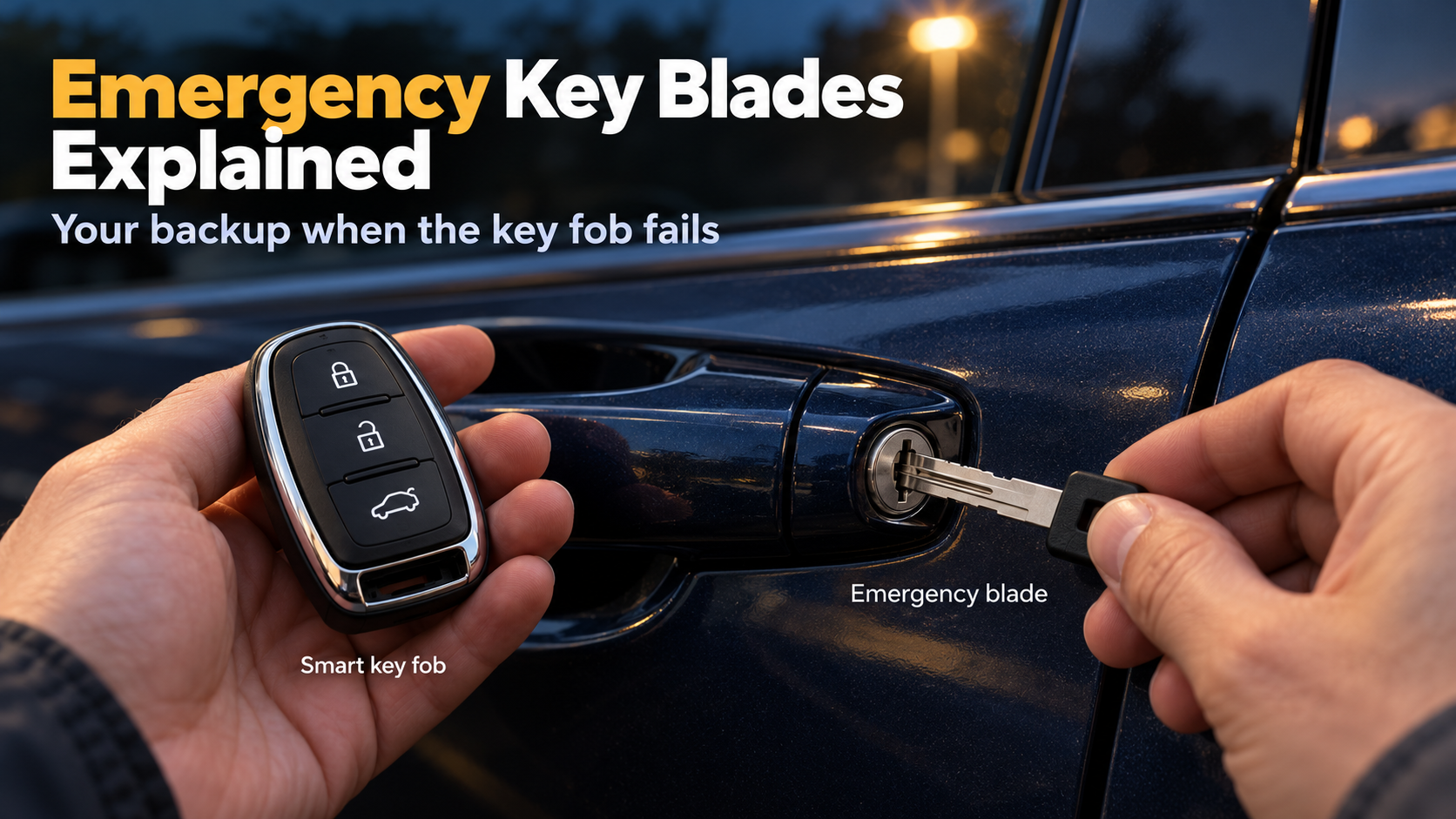
It's late, you're standing beside your car, and the fob does nothing. No beep, no click, no doors opening. Then you remember the little metal piece tucked inside it. That emergency key blade is the backup nobody thinks about until the battery gives out. Here's what it does, how it fits a modern fob, and how to pick the right one if yours goes missing.
What Is an Emergency Key Blade?
It's a small, plain metal key hidden inside a push-button fob. No chip, no buttons, no battery. Its only job is to turn a lock by hand when the electronics can't. Think of it as the spare tire of the key world: you rarely touch it, and you're very glad when it's there.
Why Modern Key Fobs Include Emergency Keys
A fob depends on a battery and a radio signal. Batteries run flat, signals get blocked, and now and then the car's own battery is the weak link. Carmakers know a driver stuck outside is having a bad day, so a key fob emergency key rides along as plan B. It also means the fob itself can stay slim and pocket-friendly, with no big metal blade poking out of the end.
How Emergency Key Blades Work
The idea is simple. When the fob can't talk to the car, the metal key talks to the lock directly, the old-fashioned way. Two things matter here: how it opens the door, and how it sits inside the fob.
Mechanical Door Access
Many cars hide the keyhole to keep the door handle looking clean. Check near the driver's handle for a small cap or cover. Pop it off with the tip of the blade, slide the blade in, and turn. The door opens just as it would with a house key. One thing worth knowing: the blade opens the door, but it usually doesn't start the car. For that, many cars let you hold the fob against a marked spot near the start button or steering column, and your owner's manual shows where.
Compatibility With Key Fob Designs
- A smart key emergency blade has to fit a slot built for it, so length and width matter
- Some fobs release the blade with a small sliding switch, while others let you pull it straight out
- The top end of the blade must sit snugly in the fob's latch, or it rattles or slips out
- The grooves along the blade have to match the door lock
- Fobs that look the same but come from different years may use different blades
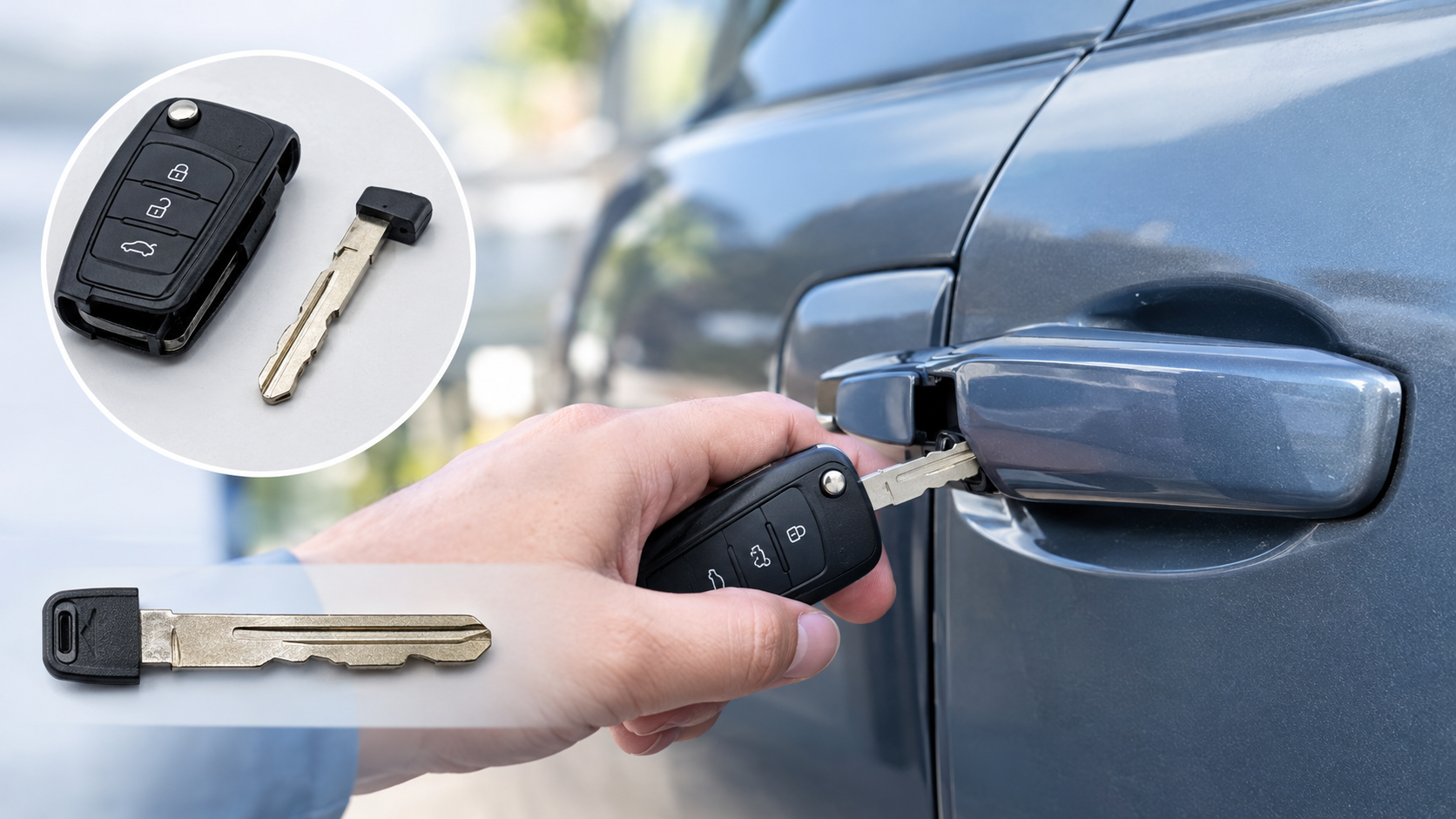
Which Key Fobs Use Emergency Key Blades?
Nearly every push-button start car comes with an automotive emergency key in some form. Here's how it plays out across common fob styles:
Fob style | Emergency blade? | Where it hides |
Push-button start smart key | Almost always | Inside the casing, released by a small latch |
Proximity key fob | Yes | Along the edge or back of the casing |
Remote head key | No, the blade is part of the head | In plain sight, fixed or folding |
Basic remote fob with no start button | Usually not, since it pairs with a separate key | Not applicable |
Card-style smart key | Sometimes, depending on the make | In a slim slot or a small holder |
How to Identify the Right Emergency Key Blade
Picking the wrong emergency car key blade is easy, because they all look like skinny bits of metal. A few clues sort them out:
- The fob's model number or FCC ID, often on the back or inside the casing
- The make, model, and year of the vehicle
- The length and width, compared with your old blade if you still have it
- The groove pattern along the blade
- The shape of the top end, which has to sit in the fob's latch
- Whether the cuts run along one edge or both
What to Check Before Buying an Emergency Key Blade
- The listing names your fob type or a matching part number
- The blade is cut or uncut, and you know who will cut it
- It slides into your fob's slot and clicks into the latch without wobbling
- You have a fresh spare battery for the fob, so the backup stays a backup
- You've tried the blade once in the door lock, in daylight, while nothing is going wrong
Common Emergency Key Blade Selection Mistakes
The classic slip is ordering by look. Two blades can share a shape and carry different grooves, and the lock doesn't care how close the match seems. Another is mixing up a hidden backup with the folding blade on a remote head key, since they live in different fobs and can't be swapped. Plenty of people never test the blade in the door until they truly need it, which is the worst moment to learn it doesn't turn. And some expect it to start the engine, then end up in the driver's seat with a perfectly good blade and a silent car.
A Backup Worth Keeping
An emergency key blade is a small thing that saves a big headache. Know where it lives, know how it releases, and test it once while everything's fine. Transponder Island sorts its keys by make and by maker, which helps you narrow down the right match for your fob.
FAQs
What is an emergency key blade?
A small metal key hidden inside a smart fob. It opens the door by hand when the fob's battery or signal fails.
How does an emergency key blade work?
You release it from the fob and use it in the hidden door keyhole. It opens the door but usually doesn't start the car.
Why do smart key fobs have emergency keys?
Batteries run flat and signals fail. The blade gives you a way in while keeping the fob slim.
Which key fobs use emergency key blades?
Mostly push-button start and proximity fobs. Remote head keys have their own built-in blade.
How do I identify the correct emergency key blade?
Match the fob's ID code and your vehicle details. Then compare the blade's length, width, and grooves.