
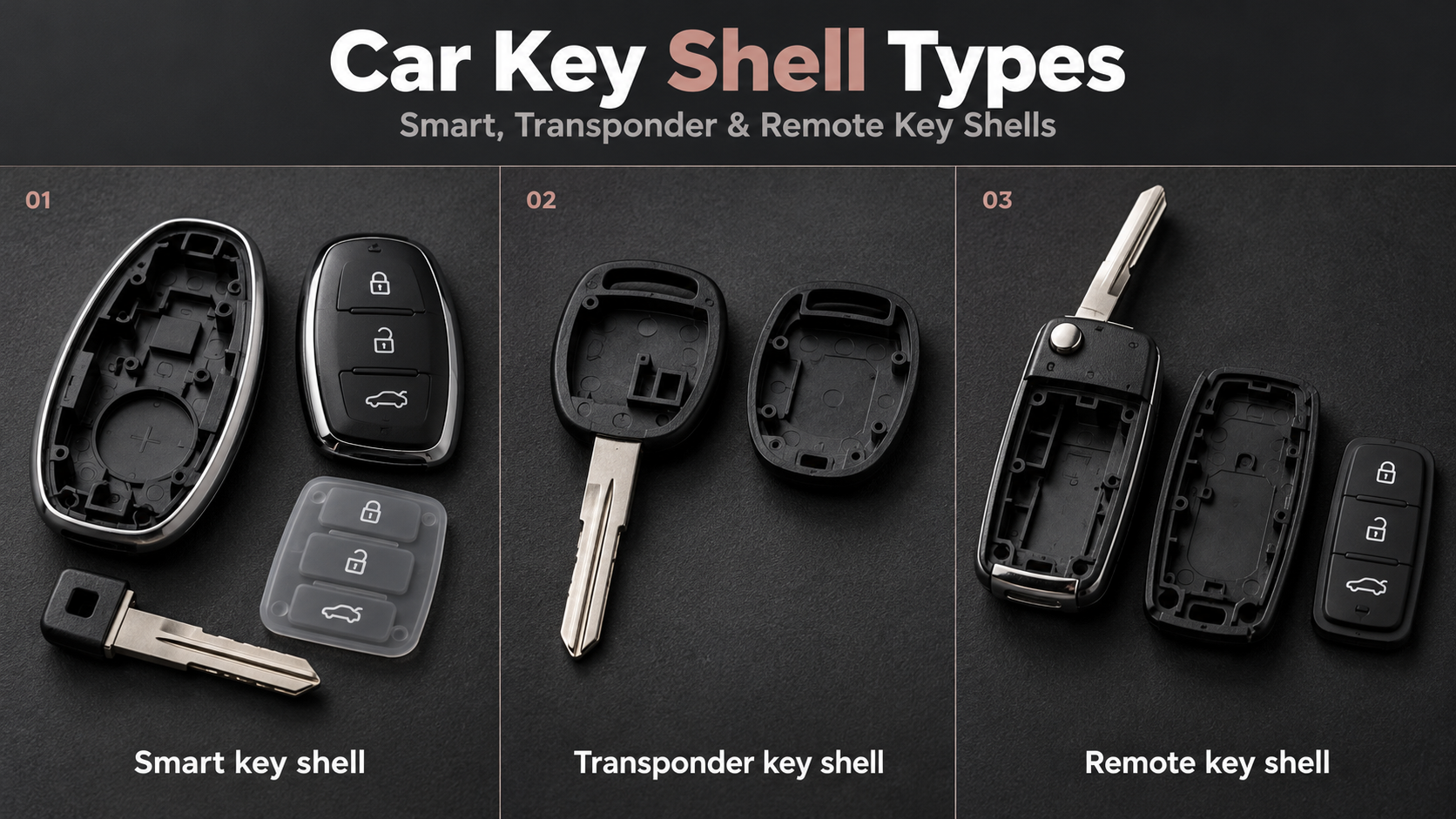
Cracked corners, buttons rubbed blank, a hinge that no longer clicks. A worn car key case looks like the end of the road for a key, yet the parts inside often still work perfectly. Swapping in a fresh body usually costs less than a whole new key, and compatible replacement key shells can help restore a worn key while keeping its working internal components . Here's how the types differ and how to pick the right one.
What Is a Car Key Shell?
Think of a phone's body. The outside gets scratched and cracked while the insides carry on working. A key shell is the same idea: the outer housing of a key or fob, covering the button pad, the battery space, and on many models the metal blade. When the body breaks, the working parts move into a new one. The catch is that the new body has to fit those parts exactly.
Common Types of Automotive Key Shells
Most automotive key shells fall into two groups, and their shapes follow the key they were built to protect. Each group has its own quirks, so it helps to know which one you're dealing with before anything else.
Smart Key Shells
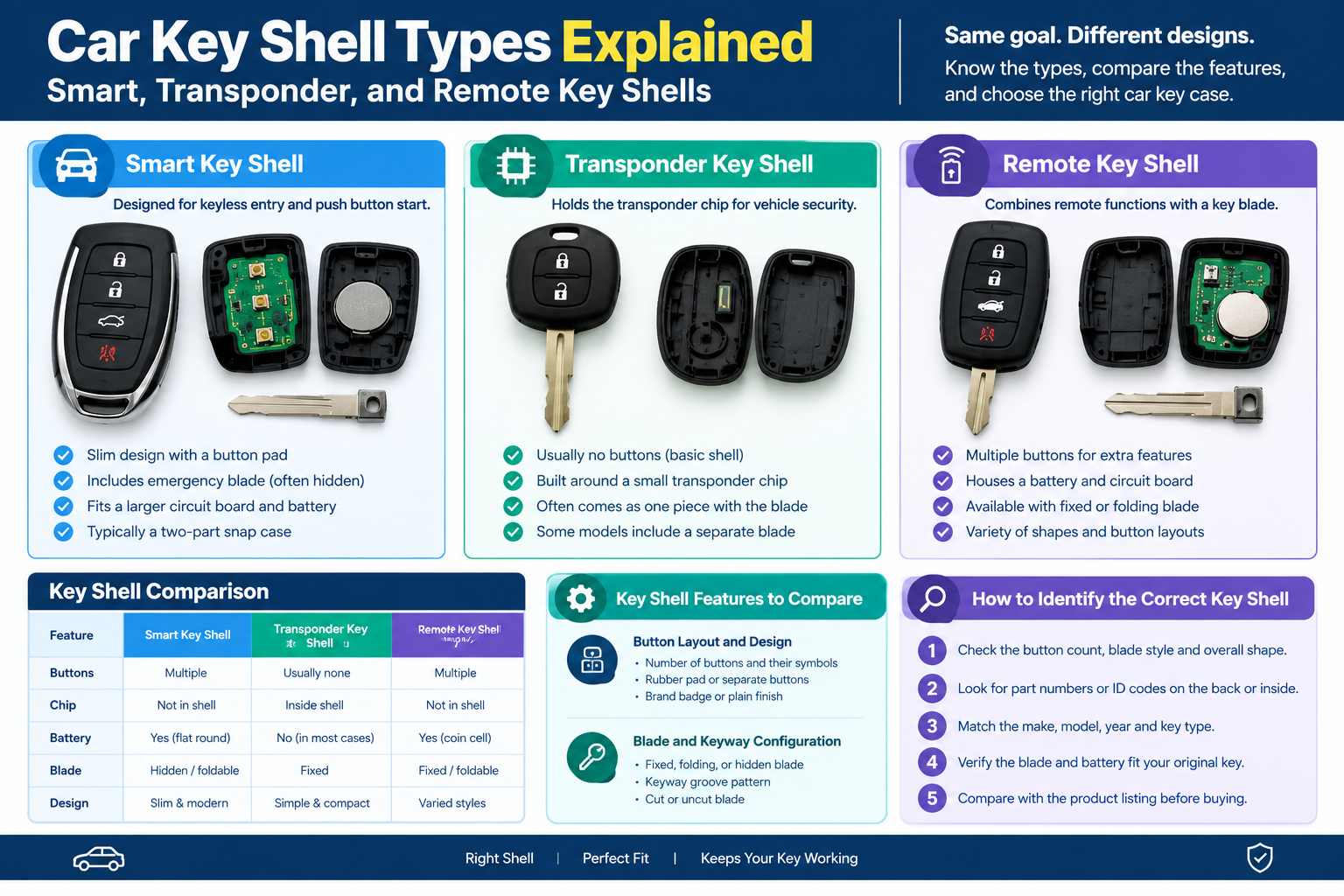
A smart key shell is made for keys that stay in your pocket while the car senses them nearby. These casings are usually slim, with a button pad and a small emergency blade that slides out from inside. They have to leave room for a larger circuit board and a flat round battery, and many are two-part snap cases that open with a thin tool.
Transponder and Remote Key Shells
- A transponder key shell is built around a plain key head that carries a chip, and often has no buttons at all.
- A remote version adds a button pad on the head.
- Some are one piece with the blade attached. Others come in two pieces, with the blade handled separately.
- A few include a folding blade that tucks into the body.
- Shapes can look alike across brands, so the small details matter more than the outline.
How Car Key Shells Differ by Key Type
Underneath the styling, each casing is built around what it has to protect. A smart body makes space for a bigger board and a battery. A plain transponder body makes space for a small chip and little else. A remote body sits in the middle, with room for buttons, a battery, and a channel for the blade. That's why a smart board won't simply drop into a remote body, even when the two look about the same size.
Key Shell Features to Compare Before Buying
Two details decide whether a new body feels right in your hand and works with your car.
Button Layout and Design
- The number of buttons, matching your original
- Where the buttons sit and which symbols they carry, such as lock, trunk, or panic
- A rubber pad or separate buttons on the remote key shell
- Brand badge or plain finish
- How the casing opens: snap, screw, or slide
Blade and Keyway Configuration
- Fixed blade, folding blade, or hidden emergency blade
- The groove pattern along the blade, called the keyway, which has to match the car's lock
- Whether the blade arrives uncut and needs cutting
- Whether your old blade can move across to the new body
How to Identify the Correct Key Shell
Start with what you can see. Lay the old fob on a table, flip it over, and note the button count, the blade style, and the overall outline. Then look for stamped letters and numbers on the back or inside. A key fob shell that looks nearly right is the easiest trap, because a millimeter of difference in thickness can stop the battery or board from sitting down properly. Compare outline, thickness, and buttons together, never just one of them.
What to Check for Key Shell Compatibility
- Make, model, and year range of the vehicle
- The type of key you started with: smart, transponder, or remote
- Whether your board and battery will sit inside the new body
- Whether the chip moves across to the new body, and who can do that
- Whether the casing ships with a blade or without one
How Part Numbers and FCC IDs Help Identify Key Shells
Looks can fool you. Codes don't. A couple of small stamps often tell you more than the whole outline.
Where to look | What you'll find | Why it helps |
Back of the fob | A short ID code, often marked FCC ID | Points to the right key family |
Inside the case, near the battery | A part number or model code | Lets you match the exact body |
Old blade or key head | Stamped letters or digits | Tells you the blade type |
Write each one down and compare it with the listing before you order.
Common Key Shell Selection Mistakes to Avoid
- Myth: any body with the same button count will do. Reality: the board, battery, and blade have to fit too.
- Myth: if it looks the same, it is the same. Reality: thickness and snap points can differ by a hair.
- Myth: a new body means a new key. Reality: only the outside changes, so your original chip and board must still work.
- Myth: smart and remote bodies are interchangeable. Reality: they're built around different boards.
- Myth: the blade always comes cut. Reality: many arrive uncut.
A Fresh Shell, Done Right
A cracked car key case isn't a reason to replace a key that still works. Check the type, read the codes, confirm the fit, and the swap goes quietly. Transponder Island lists keys by make and by maker, which makes the hunt for the right match much quicker.
FAQs
What is a car key shell?
It's the outer body of a key or fob that holds the buttons, blade, and electronics. The body can be swapped while the working parts move across.
What are the main types of automotive key shells?
Smart, transponder, and remote shells. Each is built around a different board, chip, and blade layout.
How do I identify the correct key shell for my car?
Check the button count, blade style, and thickness. Then match the ID code or part number on the back.
Can the same key shell work with different key types?
Rarely. A shell fits the board, battery, and blade it was made for, so mixing types usually fails.
What should I check before buying a car key shell?
Vehicle year range, key type, ID code, button count, and blade style. Also check whether your chip moves across.