
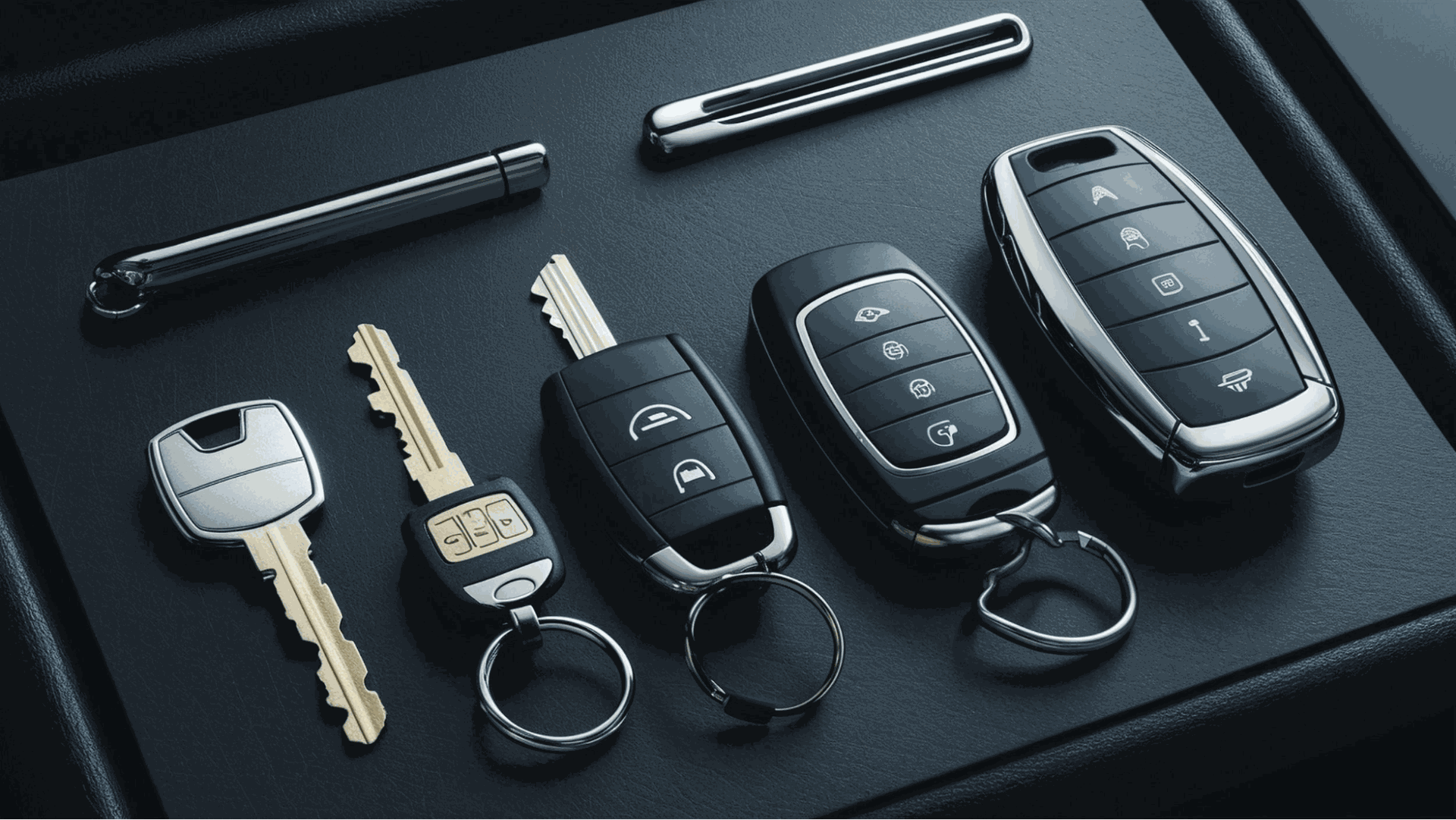
Two key fobs can look like twins and still act like strangers. One opens your doors on the first press, the other does nothing at all. Very often the culprit is car key remote frequency, the radio channel a remote uses to talk to your car. Numbers like 315 MHz and 433 MHz show up in almost every product listing, so it helps to know what they mean. Just keep one thing in mind from the start: frequency is a big clue, but it is not the whole answer.
What Is Car Key Remote Frequency?
Every remote is a tiny radio transmitter. Press a button and it sends a short coded signal on a set frequency, measured in megahertz (MHz). A receiver tucked inside the car listens on that same frequency and reacts when it hears the right code.
Think of an old car radio. If your dial sits at 98.3 and the station broadcasts at 101.1, all you get is static. A remote and a car work the same way. The vehicle only responds to signals it was built to recognize, so the remote has to match the car, not just look the part.
Why Does Frequency Matter for Key Fob Compatibility?
A mismatch is easy to feel but hard to diagnose by eye. Here is what it usually looks like:
- The doors ignore every button press, even with a fresh battery.
- A replacement that looks identical runs on a different key fob frequency than the original.
- Two cars of the same model can carry different remotes, depending on market or trim.
- A matching number helps, but it does not prove the remote fits.
Common Automotive Remote Frequencies
Most remotes land on a small group of frequencies. The automotive remote frequency a car actually uses depends on its exact build, not on a rough guess about where it was made. This quick table shows the usual suspects.
Frequency | Where it often appears | Worth knowing |
315 MHz | Many North American vehicles | Common, but not universal |
433 MHz (often 433.92 MHz) | Many models worldwide | Some cars offer both 315 and 433 versions |
868 MHz | Certain European systems | Less common, tied to specific markets |
315 MHz Key Fobs
You will run into 315 MHz a lot on vehicles sold in North America. A good example is theToyota GQ4-52T remote head key, listed at 315 MHz. Even so, any 315 MHz key fob still needs the right button layout and ID details, so use the number as a first filter and nothing more.
433 MHz and Other Common Frequencies
On the 433 side, you will often see the figure written as 433.92 MHz. TheChevrolet Cruze LXP-T004 listing is a handy case. It specifies a 433 MHz car remote and warns that a 315 MHz version of the same style exists. Same model, two frequencies. Other bands like 868 MHz turn up on some systems, so always follow the car's exact specification over any regional rule of thumb.
How to Check the Frequency of a Car Key Remote
This part is hands-on, and you can often finish it in a few minutes.
- Read the remote. Check the back and the inside of the case for markings. Some remotes print the MHz right on them.
- Find the FCC ID or part number. If there is no frequency printed, one of these is usually stamped nearby.
- Look it up. Match the ID to a manufacturer spec or a matching listing to read off the car remote frequency.
- Confirm the vehicle. Note the year, make, model, and market the remote was made for.
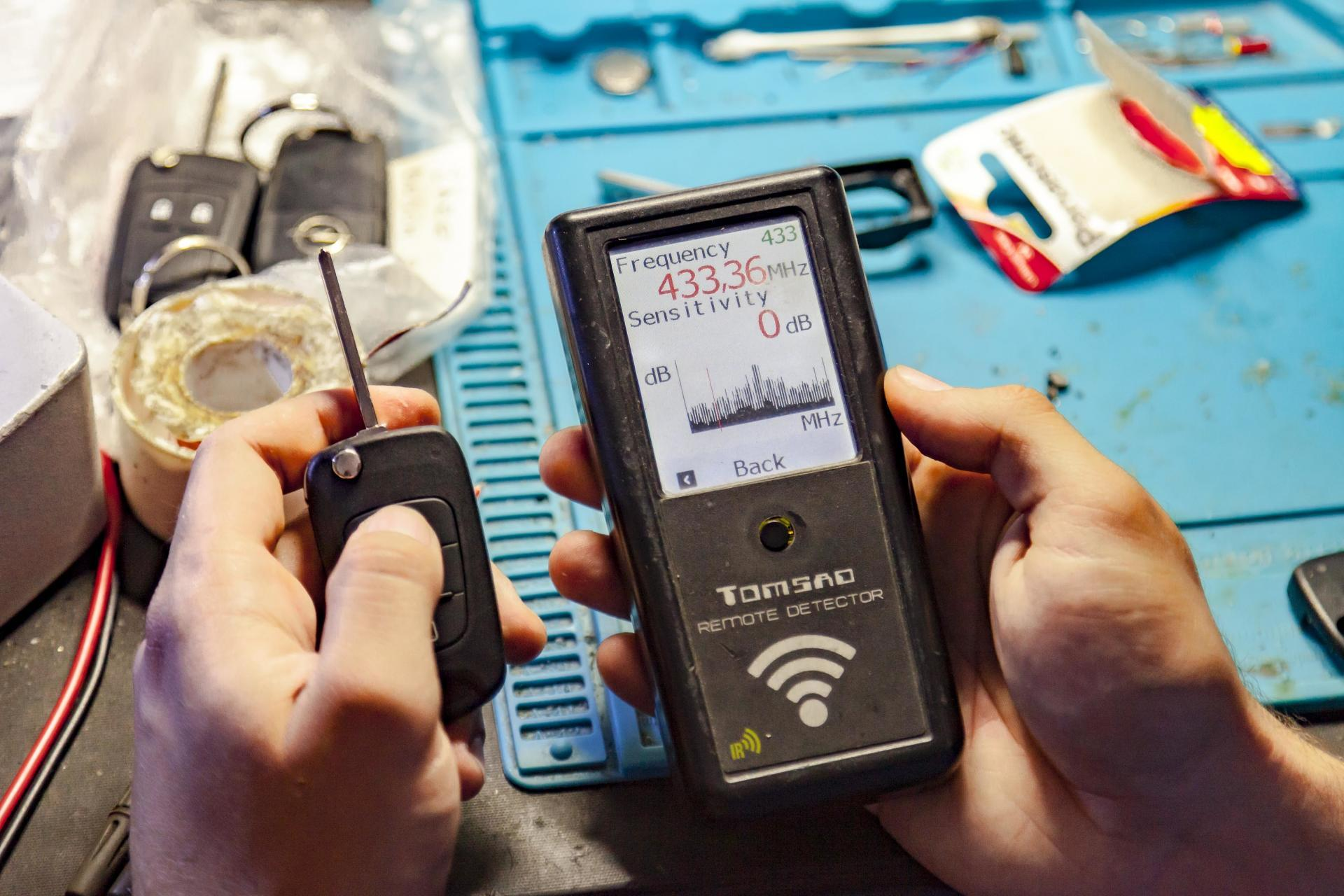
- Ask a locksmith if it is still unclear. A technician with a remote frequency tester can read the signal the remote actually sends.
Skip phone apps and camera tricks. They are not a reliable way to measure radio frequency.
Frequency vs. FCC ID and Part Number
These three details get mixed up all the time, but each one answers a different question.
- Frequency: the radio channel the remote transmits on.
- FCC ID: the code tied to the remote's radio authorization.
- Part number: the identifier that separates one remote design from another.
Here is why it matters. Two remotes can both run at 315 MHz and still differ in button layout, coding, or chip. Shared frequency, different remote. TheNissan remote head key listing shows how an FCC ID (CWTWB1U751 here) is used to pin down the right match. Also keep in mind that aftermarket remotes may list a compatible FCC ID rather than the one printed on your original.
One more distinction worth making: the remote's radio signal is separate from the transponder chip that lets the engine start. A remote can match on frequency while the chip still needs its own attention.
How to Verify Remote Compatibility Before Buying
Once you know what your original remote is, use this checklist to judge a replacement:
- Vehicle year, make, model, and any trim or option differences match.
- The listed frequency matches what your vehicle uses.
- The FCC ID matches the original, or the listing clearly names a supported replacement.
- The OE part number or cross-reference lines up.
- Button functions, key blade style, and chip type fit your key.
- You know whether professional programming is required.
- A qualified supplier or locksmith has confirmed anything that looks conflicting.
Treat car key remote frequency as one filter among several. And remember that finding a compatible remote and programming it to the car are two separate jobs.
Common Car Key Remote Frequency Mistakes to Avoid
Most bad purchases come from a short list of habits. Each one has an easy fix.
- Buying by shell shape. Fix: compare specs, not looks.
- Assuming one model means one frequency. Fix: check the year and market first.
- Treating matching MHz as proof of a fit. Fix: confirm the FCC ID and part number too.
- Mixing up remote and transponder programming. Fix: find out which one your key needs, or both.
- Ignoring the remote's condition. Fix: read whether it is new, used, reusable, or needs preparation.
Choosing a Compatible Replacement Remote
The safest purchase comes from checking everything together: frequency, FCC ID, part number, vehicle details, and programming needs. Any one of them alone can mislead you. Take a few minutes to read the specs before ordering, and keep the original remote nearby for comparison. Automotive locksmiths and eligible professional buyers can browse remote specifications and matched options at Transponder Island.
FAQs
What is a car key remote frequency?
It's the radio channel your remote uses to send signals to the car, measured in MHz. Common ones are 315 and 433.
Why does key fob frequency matter?
The car listens on one channel only. If the remote transmits on another, the buttons won't do a thing.
What is 315 MHz used for in car remotes?
Door, trunk, and panic buttons on many North American vehicles. Still worth confirming for your exact car.
How can I check a key fob frequency?
Look for MHz or an FCC ID on the remote, then match it to a spec. A locksmith can read it with a tester if nothing's printed.
Can the wrong frequency affect remote compatibility?
Yes. Wrong channel, no response. Right channel but wrong FCC ID or part number can still fail, so check all three.